
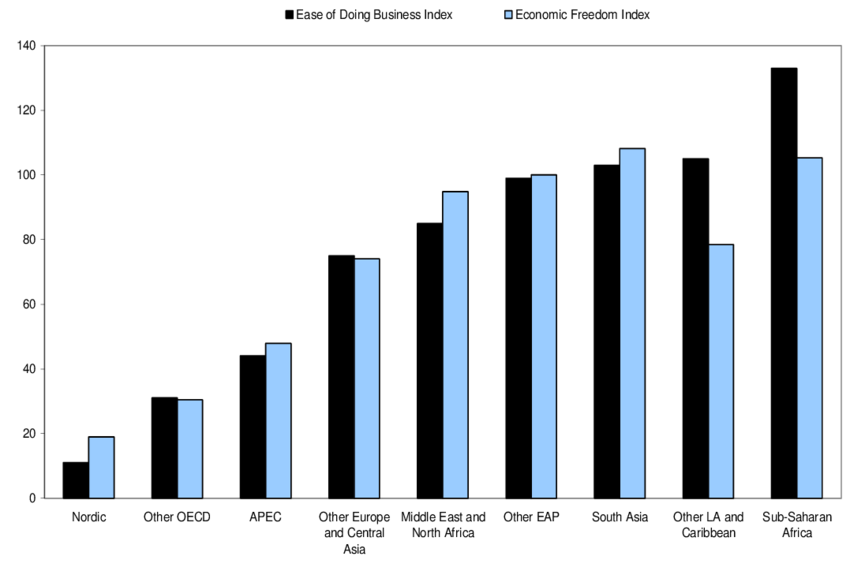
The Ease of Doing Business ranking has become one of the most critical global indicators for measuring a country’s business-friendly regulatory environment. Governments, investors, and entrepreneurs all pay close attention to this ranking because it reflects how efficiently business activities can be started, managed, and expanded in a particular country.
In this article, we’ll explore what the Ease of Doing Business ranking means, how it is calculated, and why it plays a critical role in attracting investment and fostering economic growth.
What Is the Ease of Doing Business Ranking?
The Ease of Doing Business ranking is an index developed by the World Bank to assess the ease of doing business in different countries. The ranking evaluates regulatory factors that impact a company’s ability to establish, operate, and terminate its business.
Each country is scored on various parameters such as:
- Starting a business
- Dealing with construction permits
- Getting electricity
- Registering property
- Paying taxes
- Trading across borders
- Enforcing contracts
- Resolving insolvency
The higher a country’s Ease of Doing Business ranking, the more business-friendly it is considered to be.
Why the Ease of Doing Business Ranking Matters
1. Attracts Foreign Investment
A high Ease of Doing Business ranking sends a strong message to foreign investors that a country has stable policies and transparent regulations. This encourages multinational companies to invest and expand their operations.
2. Encourages Entrepreneurship
When it’s easy to register a company, obtain licenses, and access finance, more people are willing to start businesses. This leads to innovation, job creation, and economic diversification.
3. Boosts Economic Competitiveness
Countries that improve their Ease of Doing Business ranking tend to become more competitive globally. Efficient systems, reduced red tape, and digital transformation all contribute to faster business operations.
4. Promotes Transparency and Governance
Improving business regulations often leads to enhanced governance and a reduction in corruption. Streamlined systems make it harder for bureaucratic delays or hidden costs to hinder growth.
Key Factors Affecting the Ease of Doing Business Ranking
Several critical factors influence a country’s Ease of Doing Business ranking:
- Regulatory Reforms: Simplifying rules for starting and operating a business.
- Taxation Policies: Transparent and predictable tax systems improve investor confidence.
- Infrastructure Development: Reliable electricity, internet access, and logistics networks facilitate smoother business operations.
- Digital Governance: Online registration, e-filing, and e-payment systems streamline processes, saving time and increasing efficiency.
- Legal Framework: A strong contract enforcement system ensures business security.
Top-Performing Countries in Ease of Doing Business Ranking
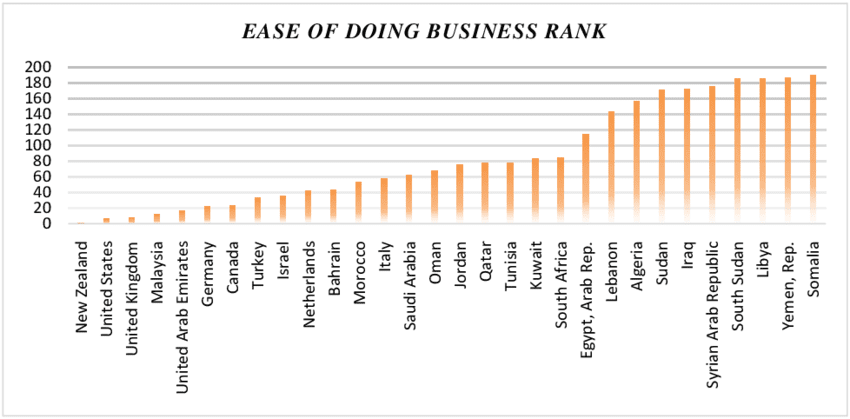
Traditionally, countries such as New Zealand, Singapore, Denmark, and South Korea have consistently ranked at the top of the Ease of Doing Business rankings due to their transparent regulations and efficient business processes. These nations offer seamless company registration systems, low corruption levels, and strong infrastructure — making them attractive destinations for entrepreneurs and investors alike.
How Countries Can Improve Their Ease of Doing Business Ranking
Governments aiming to improve their position in the Ease of Doing Business ranking can take several steps:
Simplify Licensing and Registration Procedures
Reduce the number of steps and approvals required to start a business.
Digitize Government Services
Introduce online portals for tax filing, business registration, and property registration.
Enhance Access to Finance
Support small and medium-sized enterprises (SMEs) with funding opportunities and credit access.
Improve Legal Efficiency
Streamline contract enforcement and dispute resolution processes to enhance efficiency and effectiveness.
Encourage Transparency
Publish clear regulations and promote accountability at all administrative levels.
The Future of the Ease of Doing Business Ranking
While the original World Bank’s Ease of Doing Business report was discontinued in 2021 due to data concerns, a new and improved framework is expected to replace it soon. Many countries continue to use the same metrics to benchmark their progress and evaluate economic reforms.
This evolution shows that the concept of Business ranking remains vital — both as a policy tool and as a signal of economic strength.
Conclusion
The Ease of Doing Business ranking is more than just a global scoreboard — it’s a reflection of a country’s commitment to economic reform, innovation, and transparency. Nations that consistently improve their rankings not only attract investors but also create thriving environments for entrepreneurs and citizens alike.
In a world driven by competition and efficiency, focusing on the Business ranking is a clear path toward sustainable economic growth and global competitiveness.